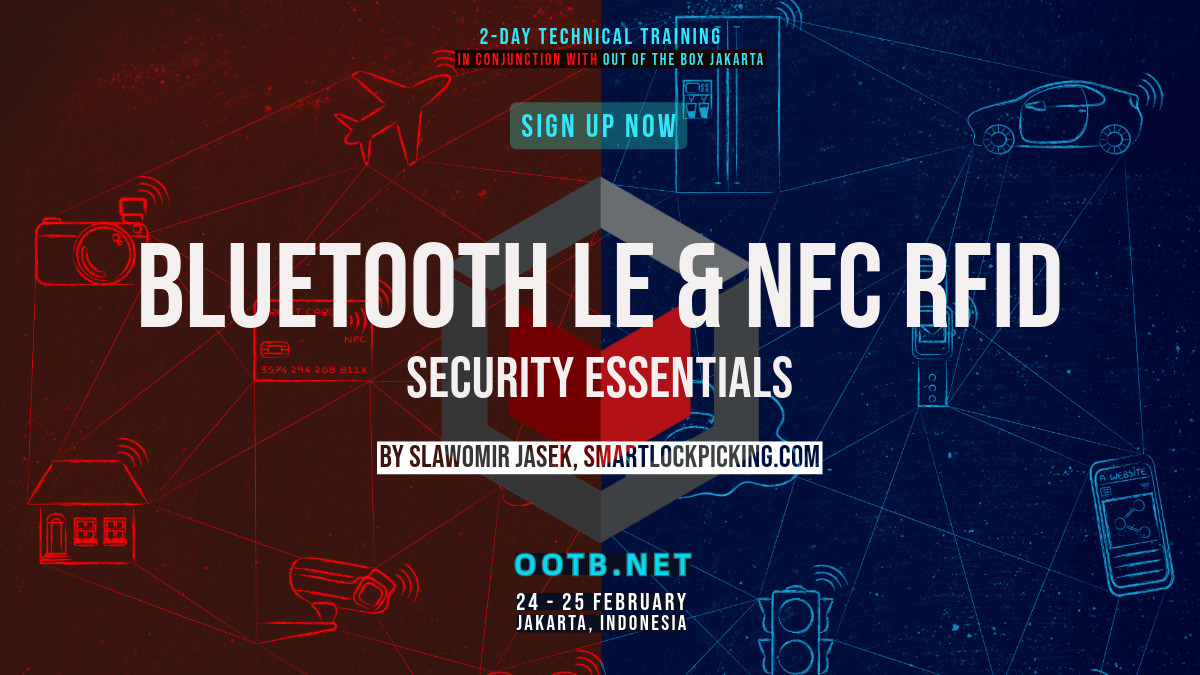
Bluetooth Low Energy (BLE) and NFC/RFID are widely used wireless technologies that power a broad range of devices, from IoT gadgets and toys to high-stakes systems like access control systems, smart locks, medical equipment, and payment solutions. With the rapid growth in the number of such devices, securing them has become a critical priority, driving a surging demand for specialists in this field. This unique hands-on course meets this demand by providing a thorough overview of the security of BLE and NFC technologies, along with practical, real-world skills that are immediately applicable.
Bluetooth Low Energy is one of the most common and rapidly growing IoT technologies. We are immersed in surrounding BLE signals: phones, beacons, wearables, TVs, home appliances, toothbrushes, sex toys, light bulbs, smart locks, electric scooters, cars, medical devices, crypto wallets, 2FA, banking tokens, payment terminals - to name just a few. Unfortunately the prevalence of technology does not come with security. Alarming vulnerabilities are revealed day by day – not only in individual devices’ implementations, but also generic: in the Bluetooth specification itself. And yet, the knowledge on how to comprehensively assess security of such devices still remains uncommon. This training aims to fill this gap, with the best possible - hands-on approach.
Bluetooth Low Energy is one of the most common and rapidly growing IoT technologies. We are immersed in surrounding BLE signals: phones, beacons, wearables, TVs, home appliances, toothbrushes, sex toys, light bulbs, smart locks, electric scooters, cars, medical devices, crypto wallets, 2FA, banking tokens, payment terminals - to name just a few. Unfortunately the prevalence of technology does not come with security. Alarming vulnerabilities are revealed day by day – not only in individual devices’ implementations, but also generic: in the Bluetooth specification itself. And yet, the knowledge on how to comprehensively assess security of such devices still remains uncommon. This training aims to fill this gap, with the best possible - hands-on approach.